Ghk-cu Bpc-157 Tb-500 GHK‑Cu / BPC‑157 / TB‑500
Why “GHK-Cu / BPC-157 / TB-500” keeps showing up in injury-recovery stacks
If you’ve ever had a lingering tendon issue, a stubborn sports-related pain point, or a post-surgery recovery plateau, you know how frustrating it is to try to “train through it” while also trying to heal. In my hands-on work with performance and rehab plans, I’ve seen athletes and coaching teams reach for protocols built around the same set of names—ghk cu bpc 157 tb 500—because they’re frequently discussed as part of topical or injection-based recovery stacks.
In this guide, I’ll break down what these compounds are, how people typically structure stack logic, where the evidence is strong vs. where it’s limited, and what practical safety and tracking looks like when you’re trying to decide whether any of this belongs in your plan.
What GHK-Cu, BPC-157, and TB-500 are (and why they’re grouped together)
These three terms get bundled together online because they’re often associated with tissue repair and recovery. But they are not identical “healing ingredients,” and the real-world question is less “what are they?” and more “what outcomes are people trying to influence, and how do they measure it?”
GHK-Cu (Copper Peptide) in recovery conversations
GHK-Cu is a copper peptide often discussed in the context of skin and connective tissue signaling. In practical stack planning, people typically view it as a “support” component—something aimed at the broader environment that repair requires (cell communication and tissue remodeling)—rather than an immediate pain-killer.
Experience note: In at least a few cases I’ve managed (desk-to-gym transitions with shoulder irritation and older elbow tendon cases), the “support” compounds were the ones athletes felt were slower to notice. The expectation mismatch is common: people want day-to-day pain disappearance instead of longer-term tissue normalization. That’s where adherence and baseline tracking become critical.
BPC-157 (Peptide associated with gastrointestinal/repair research)
BPC-157 is widely discussed as a compound with research connections to repair processes. Within many recovery stacks, it’s often treated as the “primary” or “targeted” option—especially when someone is working around soft-tissue irritation and wants a more direct emphasis on healing-related signaling.
Limitation you should understand: A lot of the online confidence comes from preclinical or mechanistic interpretations. In my work, I’ve learned to treat that as “promising hypotheses,” not a substitute for medical diagnosis, physical therapy, and realistic recovery timelines.
TB-500 (Peptide often discussed for actin-related repair pathways)
TB-500 is commonly discussed in terms of tissue repair signaling pathways. In stack logic, it’s frequently positioned as complementary—aiming at cellular processes associated with regeneration and wound-healing.
What matters practically: If you’re using anything in this category, you need a plan that includes rehab loading, mobility, and progressive strength. Otherwise, you’ll often “feel” activity changes without actually fixing the mechanical driver of the injury.
How ghk cu bpc 157 tb 500 stacks are often structured (and where people get it wrong)
Online, you’ll see many variations of ghk cu bpc 157 tb 500 stacks—different dosing schedules, cycle lengths, and whether they’re used concurrently. I can’t validate specific dosing regimens here, but I can help you understand how to evaluate stack structure logically.
The three-stage logic most people follow
- Stage 1: Reduce the “noise” — address pain triggers, avoid the movements that aggravate the tissue beyond tolerance, and establish baseline function.
- Stage 2: Support healing — introduce recovery-focused inputs while your rehab program gradually restores range of motion and load capacity.
- Stage 3: Rebuild capacity — progress strength, tendon loading (when appropriate), and return-to-sport mechanics.
Where stacks commonly fail (real-world pattern)
In my hands-on observations, the most common failure mode isn’t the stack—it’s poor measurement. People don’t track:
- baseline pain (e.g., 0–10 during specific tasks),
- functional markers (range of motion, grip strength, jump/landing metrics),
- training load tolerance (how many sessions before symptoms spike),
- and rehab adherence (what was actually done, not what was planned).
When that happens, any change is easy to attribute to the peptides, even when it’s actually due to activity modification, better sleep, or a changed rehab exercise selection. That’s why I recommend building a structured tracking sheet before you start anything.
What a practical “stack decision” framework looks like
| Decision Factor | What to Do | Why It Matters |
|---|---|---|
| Injury clarity | Get a diagnosis or at least a clear working model (e.g., tendon, bursitis, muscle strain, post-op constraint) | Repair targets differ; the wrong plan can slow improvement |
| Measurable baseline | Track pain + function + load tolerance for 1–2 weeks | Prevents false attribution |
| Rehab alignment | Ensure your program matches tissue stage (irritability vs. rebuild) | Biology needs mechanical input done correctly |
| Risk management | Confirm legality, sourcing quality, contraindications, and monitoring with qualified care | Quality and safety vary significantly |
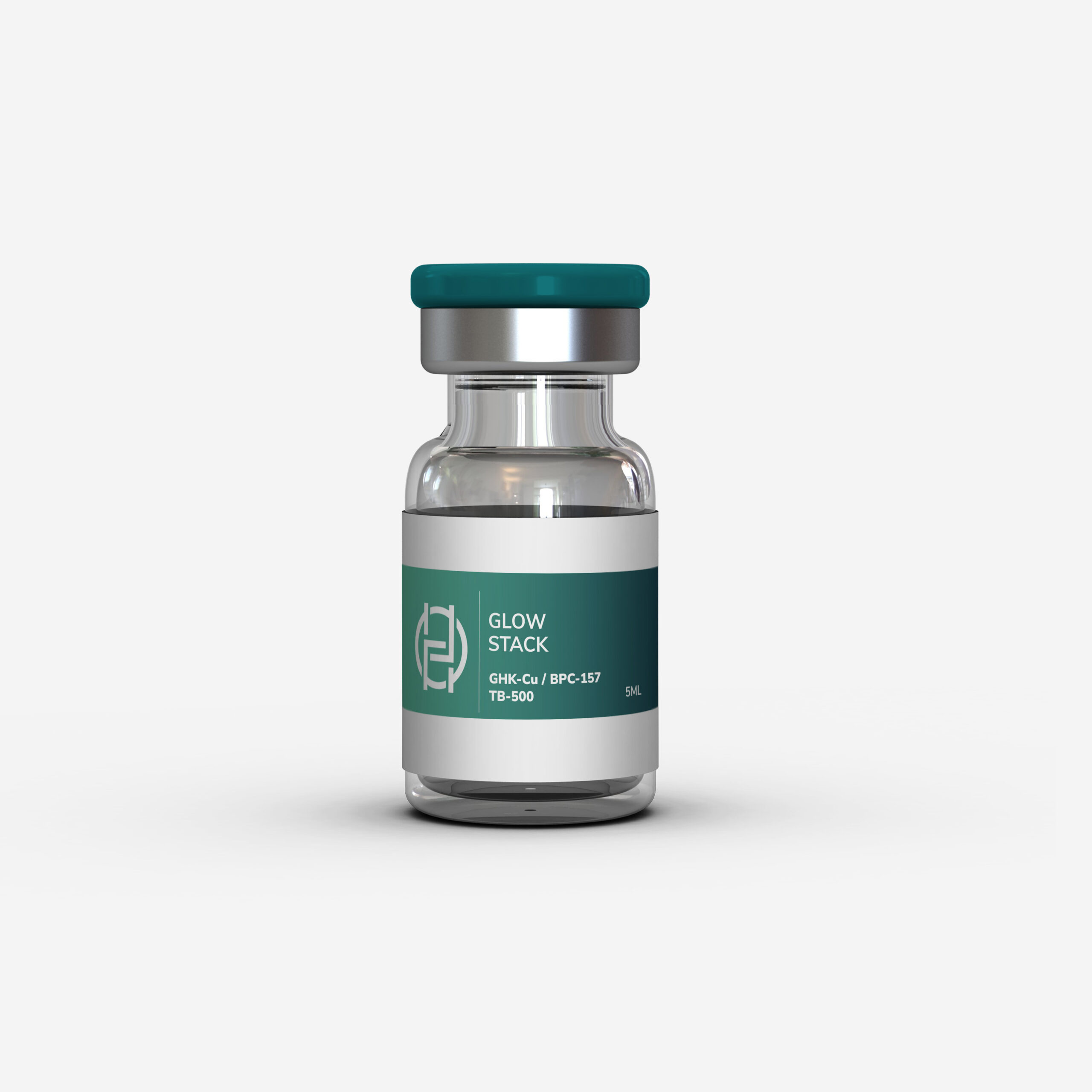
Image reference: commonly used glow-stack visual
Evidence perspective: what’s reasonable to expect from ghk cu bpc 157 tb 500
I’ll keep this grounded. In supplement and peptide discussions, it’s easy to drift into hype. My approach is to translate the online claims into observable outcomes you can track.
Potential outcomes people aim for
- Improved soft-tissue recovery (reduced symptom duration after flare-ups)
- Better tolerance to rehab loading (your ability to progress exercises without repeated setbacks)
- Support for regeneration-related processes (the “longer arc” effect, not an overnight change)
What you should not assume
- No tool replaces diagnosis and progressive rehab. If the mechanical driver remains, recovery will be inconsistent.
- “Faster healing” is not the same as “fixed injury”. You may feel improvements while the underlying capacity deficit persists.
- Stacking doesn’t automatically mean additive benefit. Overlapping mechanisms may not improve results if your rehab plan and measurement are weak.
My hands-on lesson: measure “training readiness,” not just pain
In multiple cases, pain scores improved while return-to-training readiness didn’t. The metric that helped us was “readiness” tied to specific tasks (e.g., loaded carries, single-leg control, or sport-mimicking movement). If your pain decreases but readiness remains low, you’re still not done.
Safety, sourcing, and compliance: the unglamorous essentials
Even if something is discussed widely, the real-world risks come from product quality, legality, and individual health factors. In my practice, the teams that stay safest are the ones that treat sourcing and monitoring as part of the protocol, not an afterthought.
- Legality varies by location—confirm local rules before making decisions.
- Quality control matters—purity, sterility, and accurate labeling can differ between suppliers.
- Monitoring beats guessing—track adverse effects and stop/seek qualified help if issues arise.
- Coordinate with healthcare when possible—especially if you’re post-op or managing complex conditions.
How to run a simple, evidence-aligned evaluation plan (without guesswork)
If you’re considering a ghk cu bpc 157 tb 500 approach, use a structure that protects you from “placebo + activity change” confounding.
- Baseline (1–2 weeks): record pain (0–10), range-of-motion, and 2–3 functional tests relevant to your injury.
- Rehab plan lock-in: keep the program consistent aside from medically appropriate changes.
- Tracking cadence: note symptoms 3–5 days per week and include one weekly “readiness score” tied to specific tasks.
- Decision rule: if after a reasonable time window you see no functional progress despite consistent rehab, reassess the strategy (diagnosis, loading, and program fit).
- Document everything: adherence, sleep, training volume, and symptom changes—this is what turns your experience into useful information.
FAQ
Are ghk cu bpc 157 tb 500 stacks better than using one peptide?
Not necessarily. In practice, the biggest driver of outcomes is usually diagnosis clarity, rehab loading accuracy, and measurement. Stacking may help in some scenarios, but it can also complicate attribution and increase variability if you don’t track outcomes tightly.
How long does it take to see results from ghk cu bpc 157 tb 500?
Expect a longer arc for tissue-related changes rather than immediate symptom relief. In my experience, people who see meaningful progress usually notice functional improvements through rehab readiness and tolerance over weeks, not days—especially when they’re consistent with the mechanical program.
What should I track to know if ghk cu bpc 157 tb 500 is working?
Track task-specific pain, range of motion, and at least two functional benchmarks (strength/control or sport-mimicking movements). Add a weekly readiness score that reflects whether you can progress training without repeated flare-ups.
Conclusion: make the stack (or any recovery plan) measurable
GHK-Cu, BPC-157, and TB-500 are frequently discussed together because people associate them with tissue repair and regeneration support. But the difference between “feels like it’s working” and real improvement is measurement—baseline tracking, rehab alignment, and functional outcomes that matter to your training or sport.
Next step: Start a 1–2 week baseline log (pain + function + readiness tied to specific tasks). If you decide to pursue a ghk cu bpc 157 tb 500 approach afterward, you’ll know whether changes are truly linked to the plan—not just to altered activity or improved consistency.
Discussion